
Margot Kidder
For Blue Moon Magazine 2024
Disclaimer: Memories are an unreliable wellspring to account for reality, and there’s no truth more porous than the patchwork of family recollection. This has made writing about Margie a challenge, because it’s impossible to say whether my view of things checks out when compared to the rest of my family (which I know it doesn’t). So, as much as I love them all, I have to block out familial POVs for the sake of this piece or I will be filled with low-frequency dread (something I’ve learned is very different from conventional writer’s block). That said, to my cousin Maggie, if you’re reading this, or Dad, or Janet or auntie Annie or anyone in my family, don’t get mad at me. This is my version of Margie, not yours.
Exploding granddad
One of my first formed memories is sitting on my aunt Margie’s shoulders clinging to the skin of her neck in the field behind my grandmum’s place in Ashcroft. We were gathered to watch as my dad and uncles lit up a row of hill-top fireworks stuffed with my granddad’s ashes, horses bucking under the neon bang of in-memoriam pyrotechnics, echos ricocheting across the canyon walls. A befitting send-off for granddaddy, and a reminder of our family’s moon-howling lunacy (and comedy reflex) in the face of loss.
Margie died three decades later, a day before my birthday on Mother’s Day in 2018. Initially, her death was described as a smooth transition to the afterlife; a 69-year-old ex-starlet dying in her sleep of natural causes at her home (or rather, John Heard’s home) in Livingstone, Montana. And, as nice as it was to have temporarily believed that after living a big and difficult life Margie found peace at the end, no one was surprised when a later coroner’s investigation ruled her death a suicide by way of “self-inflicted drug and alcohol overdose”. A planned concoction of prescription painkillers and booze made for an equally tidy story; Margot Kidder was, after all memory, a crazy lady who must have just wanted to die.

I have found the recalled version of Margie’s death disturbing for a number of reasons, but mostly because it glazes over context and eliminates the backstory for “suicide-ideation”. And I know that we - as a society - have the old habit of blaming the dead for dying, but what a disservice it is to falsely remember (or actively forget) how the lives of people we love and look up to are cut short for reasons beyond their control. Traumas, social alienation and neurological misfirings, combined with heavily addictive and readily available pain meds are what killed Margie. And even though she asked that her body be left for the bears, her death could actually be nourishing for a conversation about addiction, grief and going mad. So much more than a statistic. Margie’s story is one worth remembering.
“I thought in acting I could let my real self out and no one would know it was me. But I still don’t know if when I die, I’d like to be remembered mostly as a woman who lusted after a man who wore tights and red underpants.”
Forests, family & film
To have Superman’s girlfriend for an aunt was more than a party-trick conversation-starter. Margie dosed my life with unpredictability and madness and inspiration, and because she was not my mother, she didn’t need to be solid for me to love her unconditionally. And, although her seminal role in the Superman movies was in many ways the least interesting thing about her, like the party-trick, let Margot Kidder as Lois serve as the entry point for an incandescent, calamitous life-story that began in the bush mining town that became Yellowknife, in 1948.
Margie was born Margaret Ruth Kidder, the second in a flock of 5 kids, to my grandparents Jill and Kendall “Happy” Kidder. Because of grandad’s itinerant work engineering explosives, Margie moved to remote bush towns at the average rate of once a year. She spent her childhood roaming Canadian backwood wilderness and exploring the world through books before decamping for an all-girls boarding school in Toronto. Havergal College* sounded much like a real-life nightmare; full of bullies and sinister headmistresses. It was there that Margie caught both the acting bug and her lifelong disdain for WASP culture, and it was also where she attempted suicide for the first time.
“I guess I have some old resentment about a WASP mentality, that comes from having been rejected on some level by people who thought they were more respectable than me.”
At 19, Margie was cast in her first film; an awfully beautiful NFB (National Film Board of Canada) movie called The Best Damn Fiddler from Calabogie to Kaladar (1968), followed by a string of bit parts – notably an awkward feature with Gene Wilder called Quackster Fortune has a Cousin in the Bronx (1970). Then she moved to California, where her $400/month Malibu rental became a hub for a “peculiar little rapidly growing crowd of misfits; made up of then-unknowns like Harvey Keitel, Al Pacino and Robert DeNiro, and a flock of nascent filmmakers like Martin Scorsese, Paul Schrader, Steven Spielberg, John Milius and Brian De Palma - who Margie “promptly got a huge crush on” before starring in two of his critically acclaimed slashers. In 1975 she played opposite Robert Redford in The Great Waldo Pepper, and was cast alongside Peter Fonda and Harry Dean Stanton in her future husband’s (Tom McGuane) directorial feature, 92 in the Shade.
*Margie was intent on lifting some of the “shame of the place” and donned her forest green Havergal uniform on multiple talk show appearances and most notably when hosting Saturday Night Live on Saint Patrick’s Day in 1979.
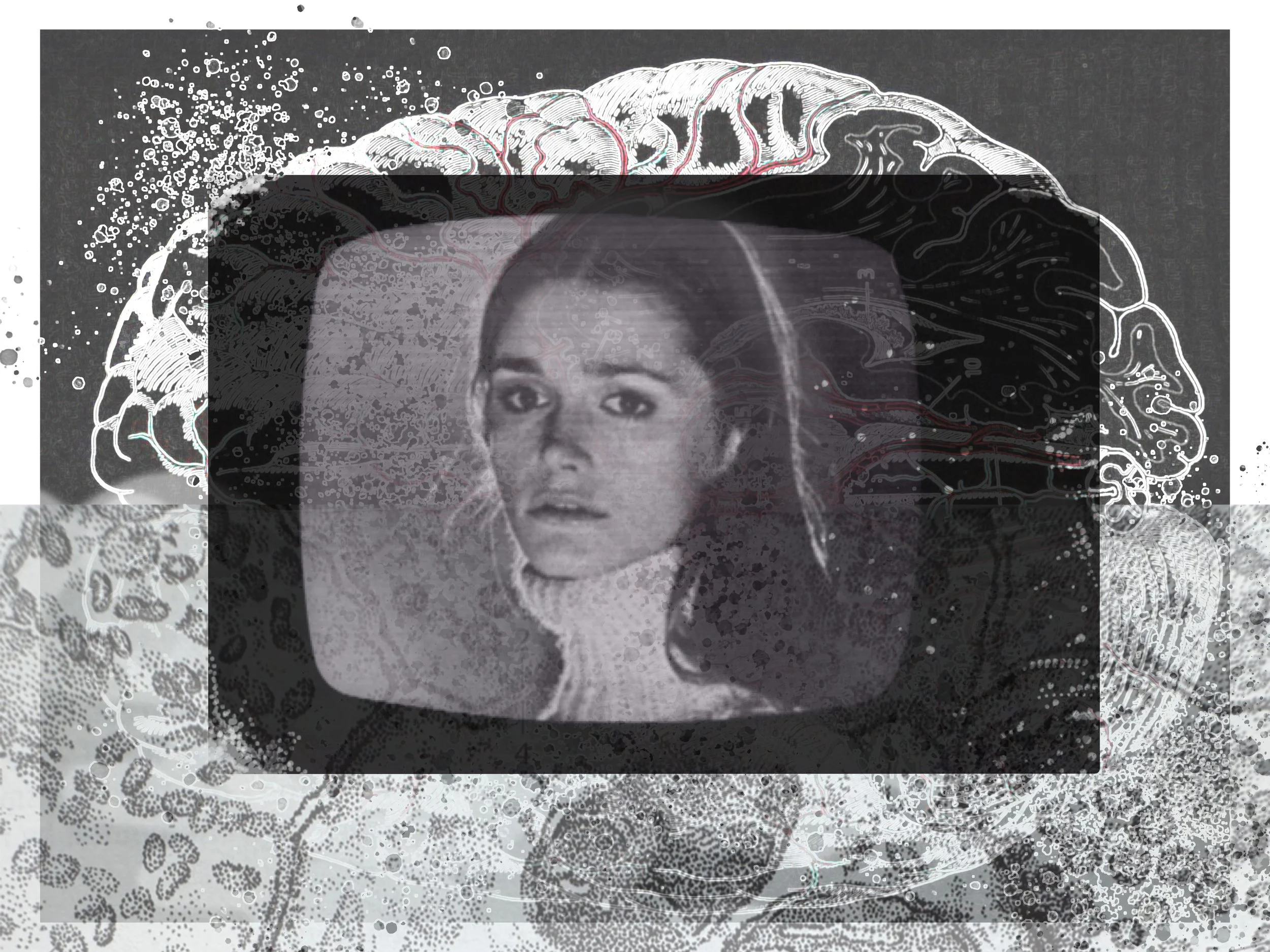
In 1977, Margie beat out Stockard Channing, Carrie Fisher and Anne Archer for the role of Lois Lane in Richard Donner’s Superman propelling her into 1980’s movie stardom, and making her a “salable commodity” actress. When Donner was unfairly sacked by the films producers, Margie rallied behind him, nearly costing her her role as Lois in Superman’s III (with Richard Pryor).
I was rather angry that Dick Donner, the man who directed the first Superman and was responsible for making the producers extremely rich and for making Christopher and I stars and giving us careers, was fired and not paid and I made my anger known.”
Five years later, in Some Kind of Hero (1982), Margie again played opposite Pryor who she maintained was “the best actor I’d ever worked with” and whose friendship, and on-again off-again love affair endured until he died in 2005. Besides McGuane, De Palma and Pryor she was romantically linked to an “inconveniently married” Pierre Trudeau while he was Canada’s Prime Minister, had a 6-day marriage to John Heard (hence the house in Montana), and got hitched to filmmaker Philippe de Broca before divorcing a year later.
Shun the shrinks
After her self-proclaimed “terrible driving” resulted in two brutal car accidents in 1990 and 1992, Margie suffered from chronic bodily pain and relied on opiate painkillers to alleviate the internal scars from a shattered pelvis and nearly-broken neck. At this time in her life, I remember her wearing a neck brace, in vocal agony and aggravation from lower back and jaw pain. The accidents, and looming bankruptcy positioned her precariously, both in mind and body for a very public manic episode in 1996* and her breakdown became fodder for the tabloids (and a Family Guy episode), as she resurfaced after having gone missing with a shaved head, and a mouth full of unglued dentures.
The manic side of bi-polar disorder often presents like schizophrenia, and at the tail-end of Margie’s mind-body excursion she accepted a bi-polar diagnosis and began taking Lithium, but the treatment for her nagging physical pain was generally to re-fill her Oxy prescription. Doctors had failed to diagnose her
*I won’t go into too many details, but to sum up; after her harddrive crashed in the midst of her writing her autobiography, Margie was propelled into a manic state as she was convinced that her ex-husband, and my cousin’s father - was in cahoots with the CIA and trying to kill her. up until that point, and after years of being misunderstood she began to speak out about psychiatrists’ over-reliance on the Diagnostic and Statistical Manual of Mental Disorders (DSM-IV) labeling practice, and the separation of treatment for body and mind.
“Your brain is an organ of your body, and therefore if there is something sick in your body, chances are there is something sick in your brain, and that you heal the two of them at the same time.”
During her come-down, and an (albeit brief) recovery, she began to open up about what it was like to live at both ends of manic depression’s frayed edges. At a time when mental breakdowns were still treated as the inevitable path dependency borne to deviant individuals, Margie took no prisoners calling out shrinks and the pharmaceutical industry’s circular logic for treating “disorders”. And while she advocated for an expanded vocabulary around mental health issues, Margie wasn’t a one-issue activist and fought injustice on multiple fronts, and most often from experience.
Good trouble CV (abridged)
● After receiving a medically un-sanctioned abortion in the late 60’s (in which her vagina was subsequently “pumped full of Lysol”) Margie petitioned for pro-choice policies.
● Because of her Lois-like investigative sense she was also a valued political campaigner for progressives like Jesse Jackson and later Bernie Sanders. Margie was fiercely anti-war, and pro-environment/human rights.
● She was arrested multiple times protesting the Keystone XL pipeline with Tantoo Cardinal*
● The months before she died were spent fighting alongside Indigenous land-defenders in Standing Rock, enduring water cannons in sub-zero temperatures to resist the Dakota Access Pipeline. I remember talking to her the day Trump broadcast himself signing to re-approve DAPL, bringing the project back from the dead by scratching his visibly evil signature up and down the executive order.
The coupled medical-pharmacological industry distills complex human experiences into weak and unimaginative tropes that Margie explained: “recall times when it was thought those with a disorder were possessed by the devil.” And, if to be normal/sane is so often code for maintaining a placated and
*She also got Tantoo to “babysit me” at COP Paris and it opened my eyes to the connection between the Tar Sands in Alberta and the Bakken oil & gas fields in Dakota. Tantoo Cardinal was also one of the only non-family members to attend my aunt’s Vancouver service in 2018, she held ceremony, and we cried for Margie. intellectually stodgy view of the world, then it’s no wonder that the most brilliant and unconventional amongst us go their own way to alleviate uncategorizable pain.
If you or anyone you know is affected by opioid addiction call:
+1-800 463 2338 (US-CAN Toll free) or reach out to TalkSuicide Canada at: +1 833 456 4566
